Storage & Display Solutions
Proper preservation techniques to ensure your collection stands the test of time.
The Enemy of Preservation: Elements
Building a valuable sneaker collection requires patience, dedication, and capital. However, all that effort can be undone rapidly if the shoes are not stored correctly. Sneakers are constructed from a complex mix of leathers, synthetic polymers, rubbers, foams, and adhesives. These materials are highly susceptible to environmental factors, specifically ultraviolet (UV) light, extreme temperatures, and fluctuations in humidity. Understanding how to mitigate these risks is the first step in proper sneaker preservation.
Combating Hydrolysis and Oxidation
One of the most feared phenomenons in vintage sneaker collecting is hydrolysis, often referred to as "sole crumbling." This occurs primarily in shoes that utilize polyurethane (PU) midsoles. When PU absorbs moisture from the air over several years, the molecular bonds begin to break down. The sole will slowly become brittle and eventually disintegrate into a sticky, crumbly mess, rendering the shoe unwearable.
Conversely, oxidation primarily affects translucent rubber soles and plastic components, turning them from icy blue or clear to a distinct, undesirable yellow. While some yellowing is inevitable as the materials age and react with oxygen, direct exposure to sunlight accelerates this process exponentially.
Optimal Storage Practices
To combat these issues, a climate-controlled environment is crucial. The ideal storage space maintains a stable room temperature (around 68-72°F or 20-22°C) with a relative humidity level of roughly 40-50%. Attics and unfinished basements are generally the worst places to store a collection due to their massive temperature and humidity swings.
If you are keeping shoes in their original cardboard boxes, be aware that the standard tissue paper provided by manufacturers is often acidic. Over time, this acidic paper can transfer onto the shoe, speeding up the yellowing process. Many collectors opt to remove the factory tissue paper and either leave the shoes bare in the box or wrap them in acid-free archival paper. Additionally, dropping a few silica gel packets into the box can help regulate localized moisture, though it is important not to over-dry the environment, which can cause leathers to crack.
Displaying Your Collection
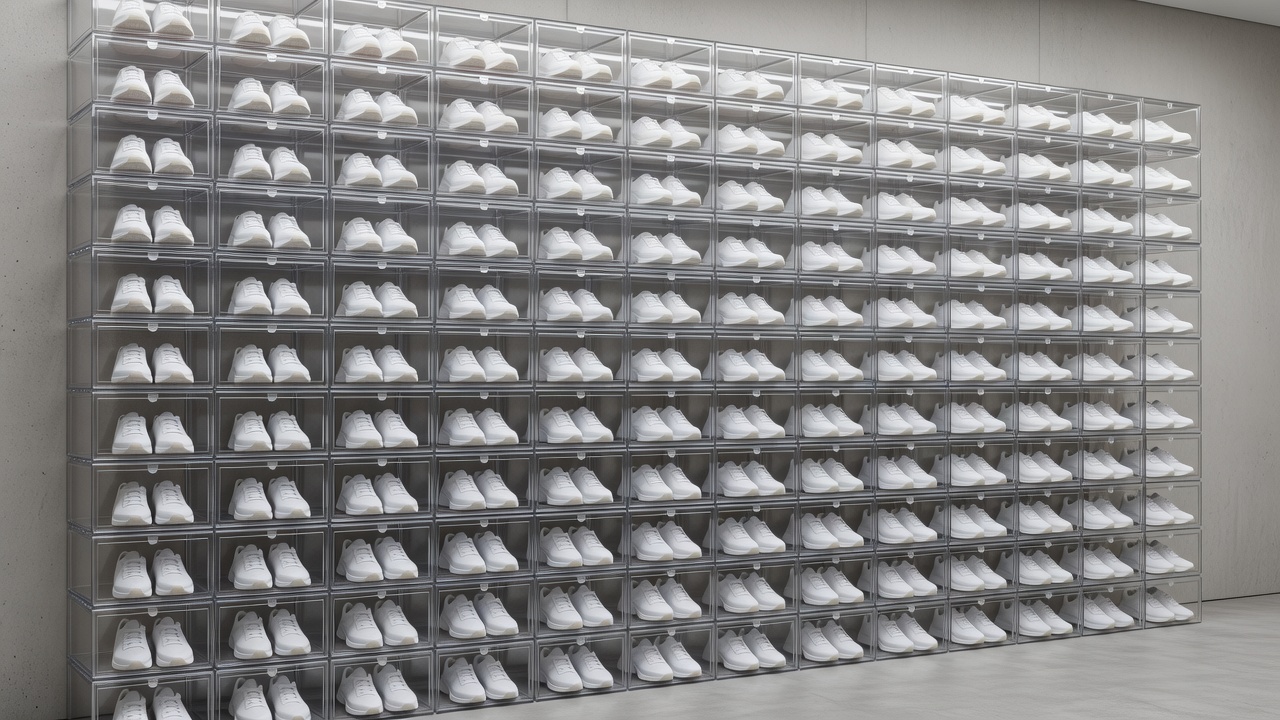
For collectors who want to enjoy their shoes visually rather than hiding them in a dark closet, specialized display solutions are available. The most popular choice is the clear, drop-front plastic container. These boxes allow for easy stacking and immediate visual access to the shoes while protecting them from dust. When selecting plastic display boxes, look for options that feature UV-blocking properties to protect the footwear from ambient room light and indirect sunlight.
If utilizing open shelving, positioning is everything. Ensure the shelves are placed in a room with blackout curtains or away from windows. If you use localized lighting to highlight the shelves, opt for LED strips rather than incandescent or halogen bulbs. LEDs emit very little heat and contain negligible UV output, making them the safest option for illuminating delicate materials.